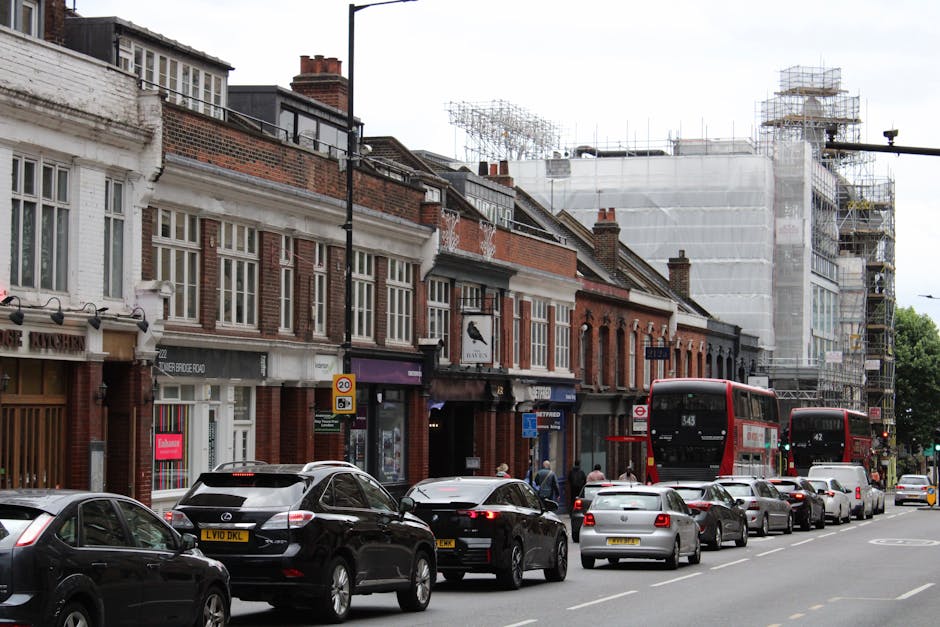
Salusbury Road removals guide Queens Park NW6

If you are planning a move on or around Salusbury Road, you already know this is not a job to leave to chance. The street has its own rhythm: busy pavements, parked cars, narrow timing windows, and the usual London mix of "just a quick load-in" turning into a bit of a puzzle. This Salusbury Road removals guide Queens Park NW6 is here to make that puzzle easier to solve. Whether you are moving out of a flat above a shop, shifting family furniture into a terrace, or arranging a small office move nearby, the right preparation makes all the difference.
In the sections below, you will find a clear walk-through of what to expect, how to plan around local access challenges, which mistakes tend to cause the most stress, and how to keep the move efficient without cutting corners. Truth be told, a well-run removal in NW6 is less about brute force and more about timing, coordination, and knowing the local setup.
Why Salusbury Road removals guide Queens Park NW6 Matters
Salusbury Road sits in one of those London neighbourhoods where a move can feel simple on paper and awkward in real life. Queens Park and the surrounding NW6 streets often have a mix of period homes, conversions, upper-floor flats, and commercial units. That means stairs, tight hallways, limited waiting space, and the occasional awkward corner that makes a sofa look mysteriously larger than it did in the living room.
The guide matters because local removals are rarely just about transportation. They involve access, timing, packing, parking, protection of floors and walls, and making sure everyone knows what happens first. If you are moving near Salusbury Road, a little extra planning can save you an entire afternoon of stress. Sometimes more.
It also matters for cost control. When the route is clear, the lift access is checked, and the team knows whether they are dealing with a one-bed flat or a full family home, the job is easier to quote properly. That is where a page like this helps you think through the move before the boxes start stacking up in the hallway.
If you are comparing moving support, it can help to look at the broader service picture too, such as removals, house removals, or flexible local help like man and van. Not every move needs the same level of support, and that is exactly the point.
How Salusbury Road removals guide Queens Park NW6 Works
At its simplest, a local removal follows the same basic flow: assess the property, plan the access, pack and protect the items, load safely, transport, and unload at the new address. But the detail is what makes the difference.
On Salusbury Road, you should think in terms of three layers:
- Property access - stairs, lifts, doorway width, corridor turns, and where the vehicle can stop.
- Road conditions - traffic flow, loading space, and how busy the street is at the time of day.
- Move size - the number of boxes, the weight of furniture, and whether fragile or awkward items need extra care.
That is why many people choose a service style that sits between a van-only job and a full removal operation. If you need one helper, one van, and a short local route, a man with a van or man with van setup may be enough. If you are shifting the contents of a larger home, then a more structured option like house movers or a full removal company can be the better call.
In practice, a good move on Salusbury Road starts before moving day. Someone checks whether parking is realistic, whether the larger furniture can clear the stairwell, and whether packing materials are ready. That one bit of prep avoids the classic moment where everybody is standing around a wardrobe, all looking at it, nobody speaking. We have all seen it.
Key Benefits and Practical Advantages
A well-planned local removal gives you more than convenience. It brings order to a day that could easily spiral. Here are the main advantages.
- Less time wasted - clear access planning means fewer delays at the kerbside or front door.
- Lower risk of damage - the right packing and handling reduce scrapes, breaks, and crushed box corners.
- Better cost predictability - accurate move details lead to more realistic quotes.
- More confidence on the day - everyone knows what goes first, what stays protected, and what needs extra care.
- Less disruption for neighbours - useful on streets where you do not want to block access for long.
There is also a mental benefit, which people sometimes underestimate. When the move is structured, you stop thinking of it as a mountain and start seeing it as a sequence. Boxes. Furniture. Final checks. Done. A calm move feels like a small victory, and honestly, after a long week of packing tape and bin bags, that calm is worth something.
If you are moving a home, you may want to compare options such as home moves, house removalists, or a more tailored movers service depending on volume and complexity.
Who This Is For and When It Makes Sense
This guide is useful for anyone moving on or near Salusbury Road, but a few groups will feel the benefit most strongly.
- Flat movers - especially if you are on an upper floor or in a converted property.
- Families - when there is a lot of furniture, children's items, and a tighter deadline.
- Students and first-time renters - when the move is small but the stress is somehow huge.
- Business owners - for small commercial moves, stock transfers, or office contents.
- Downsizers - when you need patience, sorting, and careful handling rather than speed alone.
It makes sense whenever the move has one or more of these features: limited access, heavy furniture, fragile items, a short turnaround, or the need to keep the day tidy and efficient. If the job is very small, a straightforward van-based option may do. If it is a bigger move, the more you benefit from a structured team and a clear plan.
For office or mixed-use relocations, you may also find it useful to review office removals and office relocation services. These are especially relevant for professional premises near busy local roads, where speed and discretion matter.
Step-by-Step Guidance
Here is a practical route you can follow for a Salusbury Road move. Keep it simple. Complicated plans tend to collapse at 8:10 in the morning.
- Survey the property properly. Walk the route from the front door to the vehicle point. Measure large furniture if needed. Watch for low ceilings, narrow turns, and awkward landings.
- Make a room-by-room inventory. This helps you estimate van size and loading time. It also prevents the classic "where did that box come from?" moment.
- Decide what needs dismantling. Beds, tables, shelving, and some desks often move better in pieces.
- Reserve your packing materials early. Strong boxes, tape, wrap, mattress covers, and labels are not glamorous, but they are very, very useful.
- Check parking and loading access. On a street like Salusbury Road, this step can make or break the move. If the vehicle cannot stop safely and legally close enough, time disappears fast.
- Label items clearly. Use room names and note fragile boxes. A quick marking system beats guessing at the destination.
- Prepare the essentials bag. Keep documents, keys, chargers, medication, and a kettle setup in one easy-to-reach bag.
- Do a final sweep. Open cupboards, check behind doors, look in loft spaces, and inspect sockets and windows before leaving.
The best removals feel almost boring on the day. That is a good sign. It means the planning did the heavy lifting, which is exactly what you want.
Expert Tips for Better Results
Here are a few field-tested habits that tend to pay off, especially in a local London move.
- Book the move earlier than you think you need to. Morning slots are often easier for building access and parking control, though the right time depends on the street and the property.
- Keep a clear path inside the property. Shoes, bags, laundry baskets, and random hallway clutter slow things down surprisingly quickly.
- Use consistent box sizes where possible. Stacking becomes easier, and the van load sits more securely.
- Protect the awkward items first. Mirrors, TV screens, picture frames, and marble-topped tables need extra attention. No one enjoys that sickening little crack.
- Split the move into categories. Essentials, fragile items, furniture, storage items, and bin bags for donation or recycling. Clean separation helps the day run smoothly.
One simple trick we often recommend: pack the least-used rooms first and the last-used room last. Sounds obvious, but people often start with whatever is nearest, then end up hunting for basics the night before. Don't do that to yourself.
If you want help with the pack/unpack side of things, take a look at packing and unpacking services. For some moves, that support is the difference between a tiring day and a manageable one.
Common Mistakes to Avoid
Most moving problems are preventable. The annoying thing is that they are usually prevented by fairly ordinary actions - measuring, labelling, checking access, and not leaving everything until the final night.
- Underestimating the volume of belongings. A "small move" often turns out to be a lot larger once wardrobes and kitchen items are counted properly.
- Ignoring the street layout. A vehicle may not be able to park where you hoped, especially at busy times.
- Packing fragile items loosely. Crumpled newspaper in a box is not a miracle solution. It helps, but only if done properly.
- Forgetting building rules or access restrictions. Some buildings have their own expectations around lifts, booking slots, or protective coverings.
- Leaving bins, keys, and paperwork in random places. Moving day is not the best time for treasure hunts.
Another one people miss: not asking who will actually handle the move on the day. If you care about consistency and communication, that matters. A clear contact point can save a lot of back-and-forth when the boxes start moving.
Tools, Resources and Recommendations
You do not need a truckload of gadgets to move well, but a few practical tools make life easier. The aim is control, not clutter.
| Tool or item | Why it helps | Best used for |
|---|---|---|
| Strong moving boxes | Safer stacking and easier handling | Books, kitchenware, clothing, mixed household items |
| Packing tape and labels | Keeps boxes secure and identifiable | Every room, especially fragile items |
| Furniture covers or blankets | Reduces scuffs during loading and transit | Tables, sofas, wardrobes, headboards |
| Hand truck or sack truck | Helps move heavier items safely | Appliances, stacked boxes, awkward heavy loads |
| Clear inventory list | Makes the move easier to plan and check | Whole-home and office moves |
For larger jobs, a dedicated vehicle can also be a useful recommendation. Depending on the size of the load, you might review moving van, removal van, or moving truck options. The right vehicle is less about status and more about avoiding a second trip. Nobody likes a second trip if they can help it.
Smaller, fast-turnaround jobs may suit removals van support, while bigger or more structured jobs may need a more comprehensive service from one of the broader removal options already mentioned.
Law, Compliance, Standards, or Best Practice
Any removal in London should be handled with care around safety, access, and property rules. While specific requirements vary by building and street, there are a few widely accepted best practices worth following.
- Safe lifting - heavy objects should be lifted with technique, not enthusiasm. Back injuries are not part of the fun.
- Vehicle safety - loading must be secure so items do not shift during transit.
- Property protection - floors, banisters, doors, and walls should be protected where needed.
- Insurance awareness - it is sensible to understand what the mover covers, what the customer should insure separately, and how claims would be handled.
- Clear terms - timing, waiting, access issues, and cancellations should be understood before move day.
For peace of mind, it is sensible to review a provider's stated approach to health and safety policy, as well as insurance and safety information. That is not just admin. It tells you whether the company thinks carefully about protecting people and property.
Payment and customer information handling also matter. A trustworthy moving provider should be clear about billing, security, and how personal details are used. You can usually learn a lot from pages such as payment and security, privacy policy, and terms and conditions. If a business is open about those basics, that is a decent sign.
Options, Methods, or Comparison Table
There is no single "best" way to move. The right method depends on your load size, access, timing, and budget. Here is a simple comparison to help you choose.
| Option | Best for | Strengths | Watch-outs |
|---|---|---|---|
| Man and van | Small flats, light loads, short local moves | Flexible, efficient, often ideal for quick jobs | Less suited to large household furniture or complex access |
| Removal van | Medium-sized household or office moves | More load space, better for mixed items | May still need careful planning for heavy or bulky pieces |
| Full removals | Larger homes, multiple rooms, fragile or valuable items | Structured, safer for bigger jobs, more hands available | Usually needs more advance planning |
| Truck hire | Large volumes, commercial stock, substantial furniture | More capacity and fewer trips | Can be more than you need for smaller Salusbury Road moves |
That table is the short version. In real life, the best choice is usually the one that matches your access and your timetable, not just the number of items. A compact move in a top-floor flat can be harder than a bigger move with ground-floor access. Funny how that works.
Case Study or Real-World Example
Imagine a couple moving from a two-bedroom flat just off Salusbury Road into a nearby property in Queens Park. They have a sofa, bed frames, a dining table, a few shelves, and enough boxes to make the hallway look like a little warehouse. Not a huge move, but definitely not a "just throw it in the back" job either.
They start by measuring the larger furniture, then confirm which items need dismantling. They label boxes by room, separate the essentials bag, and check the access route from the flat to the street. One of the bedrooms is on an upper floor, so they allow a bit more time for stairs and handling. They also choose a van size that avoids squeezing everything in. That one decision alone prevents the whole day from becoming a puzzle with wheels.
On moving day, the team arrives with a clear plan. The fragile items go first in the vehicle, the bulky pieces are wrapped, and boxes are grouped by room for the unload. The move stays local, tidy, and calm. No drama, no damage, no wandering around asking where the kettle ended up. That is what a good local move should feel like.
If you are dealing with a business relocation instead, the same logic applies, only with a stronger need for timing and continuity. In that case, a service focused on commercial moves or specialist office removals is usually the smarter fit.
Practical Checklist
Use this checklist in the final 48 hours before your move. It is simple, but it catches most of the little things people forget.
- Confirm the moving date and arrival window.
- Check the access route from the property to the vehicle.
- Set aside keys, documents, chargers, and medicines.
- Label boxes by room and mark fragile items clearly.
- Dismantle furniture where needed and keep fittings together.
- Protect floors, corners, mirrors, and screens.
- Separate essentials from storage and donation items.
- Confirm parking or loading arrangements if needed.
- Make sure appliances are unplugged and emptied.
- Do one last sweep of cupboards, loft spaces, under beds, and behind doors.
Practical summary: If you plan the access, pack with care, and choose the right size of vehicle or removal support, a Salusbury Road move becomes much more manageable. The job is still a move - not exactly a spa day - but it becomes a controlled one.
Conclusion
Moving on Salusbury Road in Queens Park NW6 is all about balancing local reality with good planning. The street, the buildings, the parking, and the pace of the neighbourhood all matter. Once you account for those things, the move gets easier to predict, easier to quote, and easier to complete without last-minute headaches.
Whether you need a compact local van move, a more complete removal service, or support with packing and protection, the smartest approach is always the one that fits your property, your belongings, and your timeline. Keep it calm. Keep it practical. And if possible, keep the kettle close.
Get a free quote today and see how much you can save.
When the boxes are finally stacked in the right rooms and the street noise fades into the background, you will feel that small, satisfying relief. That is the good bit. That is the bit worth planning for.
Frequently Asked Questions
What is the best removal option for Salusbury Road in Queens Park NW6?
The best option depends on the size of the move and how easy the access is. Small flat moves often suit a man and van setup, while larger household moves usually need a removal van or a full removals service.
How far in advance should I book a move on Salusbury Road?
The earlier the better, especially if you want a preferred time slot. Busy periods fill quickly, and local access planning is easier when the move is booked with enough notice.
Do I need to worry about parking or loading space?
Yes, absolutely. On a busy London street, parking and loading space can make a big difference to timing and efficiency. Always plan for the vehicle to stop safely and legally as close as possible.
Is a man and van enough for a flat move in Queens Park?
Sometimes yes. If your belongings are limited and the furniture is manageable, a man and van service can be ideal. If you have large furniture, many boxes, or difficult stairs, a larger setup may be better.
What should I do with fragile items?
Use sturdy boxes, fill empty space properly, and label them clearly. Keep fragile items grouped together and avoid packing them too loosely. It sounds basic, but it really matters.
How do I know what van size I need?
Make a simple inventory of furniture and boxes, then think about access. A small load in a difficult property may need more care than the item count suggests. When in doubt, ask for advice based on the full property layout.
Can I get help with packing as well as moving?
Yes. Many people prefer a service that includes packing and unpacking support, especially for larger or time-sensitive moves. It reduces stress and helps protect breakables.
What if I am moving a small business or office near Salusbury Road?
Then a commercial-focused service is often more suitable. Office equipment, stock, and documents need a different kind of handling from a typical home move, so it is worth choosing a service that matches the job.
What are the most common mistakes people make on moving day?
The biggest mistakes are underestimating the load, ignoring access issues, packing too late, and forgetting essentials like keys or documents. These are all avoidable, which is the frustrating part.
How can I keep the move less stressful?
Break it into steps: pack early, label clearly, confirm access, and keep one essentials bag with the things you need straight away. A calm move is usually a well-prepared move.
Should I choose a removal company or a van-only service?
If you have a larger home, fragile furniture, or several rooms of belongings, a removal company is usually the safer choice. If the move is smaller and local, a van-based service may be more cost-effective.
Where can I learn more about service details and customer protections?
It is sensible to review pages covering pricing, payment, insurance, safety, and terms before booking. Those details help you understand what to expect and make a more confident decision.